
Free PECS
- toddlerswithtism
- Nov 30, 2023
- 4 min read
This post has truly been a labor of love for all of you. So often we see parents so frustrated with no means of communication for their non speaking kiddos, and most always alternative means of communication come with a price tag or hours of labor that most just can’t commit to. We saw the need, and decided to step in and do the work to provide you all with free PECS boards that you can print out, laminate, and use to help your littles with visual aids.
Introdction to PECS
PECS stands for Picture Exchange Communication System. It was developed in the US in 1985 and was first used with pre school students who’d be diagnosed with autism, but since then it has been used with Autistic individuals of all ages. The idea is to have a child have a “communication partner” who uses no verbal communication, but instead exchanges pictures to make requests. The child will “exchange” photos with the communication partner & the partner will immediately honor the request. For example, if the child hands you the “banana” card ideally they should immediately receive a banana. The primary purpose is to help non speaking persons how to use functional language in an adaptive way. Though the objective of PECS is to offer an adaptive form of communication and verbal speech is not the main goal, research does suggest that some PECS users will eventually develop verbal speech.
There are SIX PHASES with PECS.
PHASE 1 - How to Communicate
Individuals learn to exchange single pictures for items or activities they really want.
PHASE 2 - Distance and Persistence
Still using single pictures, individuals learn to generalize this new skill by using it in different places, with different people and across distances. They are also taught to be more persistent communicators.
PHASE 3 - Picture Discrimination
Individuals learn to select from two or more pictures to ask for their favorite things. These are placed in a PECS Communication Book—a ringed binder with self-adhesive hook fastener strips where pictures are stored and easily removed for communication.
PHASE 4 - Sentence Structure
Individuals learn to construct simple sentences on a detachable Sentence Strip using an “I want” picture followed by a picture of the item being requested.
PHASE 5 - Responsive Requesting
Individuals learn to use PECS to answer questions such as “What do you want?”
PHASE 6 - Commenting
Individuals are taught to comment in response to questions such as, “What do you see?”, “What do you hear?” and “What is it?” They learn to make up sentences starting with “I see”, “I hear”, “I feel”, “It is a”, etc.
Because ages and cognitive functions of users will vary so will the length of time that it takes to master using PECS. A user is not expected to understand the concept after the first few interactions, it will take consistency & repetition like any other skill.
MODIFYING THE PECS MODEL
If you’ve read this far & you feel your child isn’t ready to be introduced to a more structured rigid version of PECS, that’s okay! There are ways to modify the original idea behind PECS to suit your individual child’s needs.
Ways to Modify: - Use the photos in combination with the real life object, hand your child the photo version before introducing the real version to associate passing the card to get the item. - Instead of cartoon-ish photos, use photos of real life objects & people. (This may be time consuming, but effective) - Use the photos to label areas in the house where objects reside— for example stick photo of cookies on cabinet to make it easier to label “cookies” when going to get them. - Use photos to label only as a first step if you feel your child is not ready to exchange cards, but be sure to always make real life associations when using the cards. - Use Velcro to attach the cards to a poster board on the wall, your child will have open access to bring you cards at their leisure. This is a low demands approach. - Use the cards to show your child what to expect next. For example- pick up the “brush your teeth card” before going to brush your teeth.
TIPS & TRICKS
- Stay consistent on your end.
- Don’t be discouraged if you feel your child isn’t listening— they hear you & see you.
- Give yourself & your child grace.
- Remember that there is really no right or wrong way— make adjustments as needed to fit your child’s specific needs / learning style.
As parents to Autistic children ourselves, we’ve used variations of the PECS system, and understand that the process can be overwhelming and confusing. We wanted to provide you all with a place to start.
REMINDER
The boards we’ve made are intended to be laminated and cut into single cards. However, you can also make the boards provided into a binder if that better suits your needs.

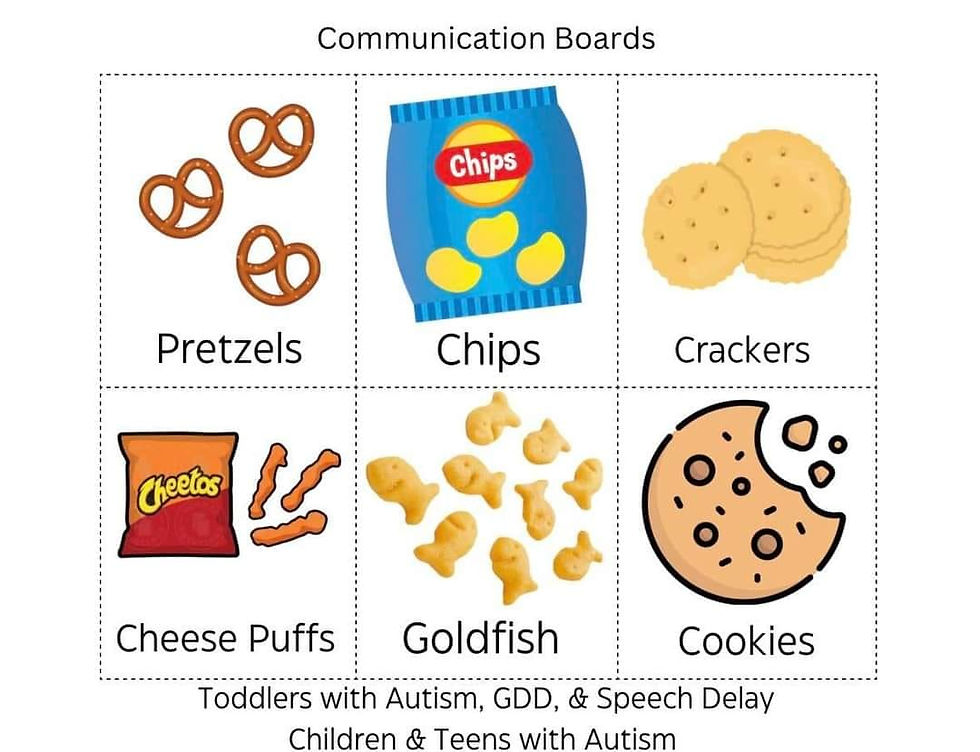
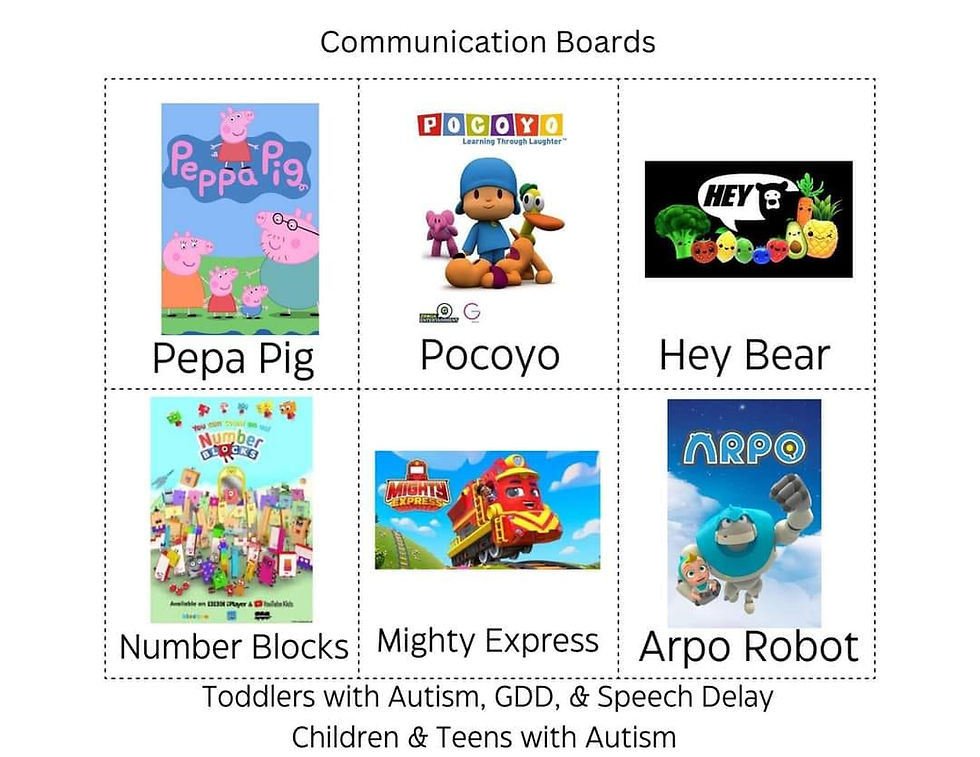

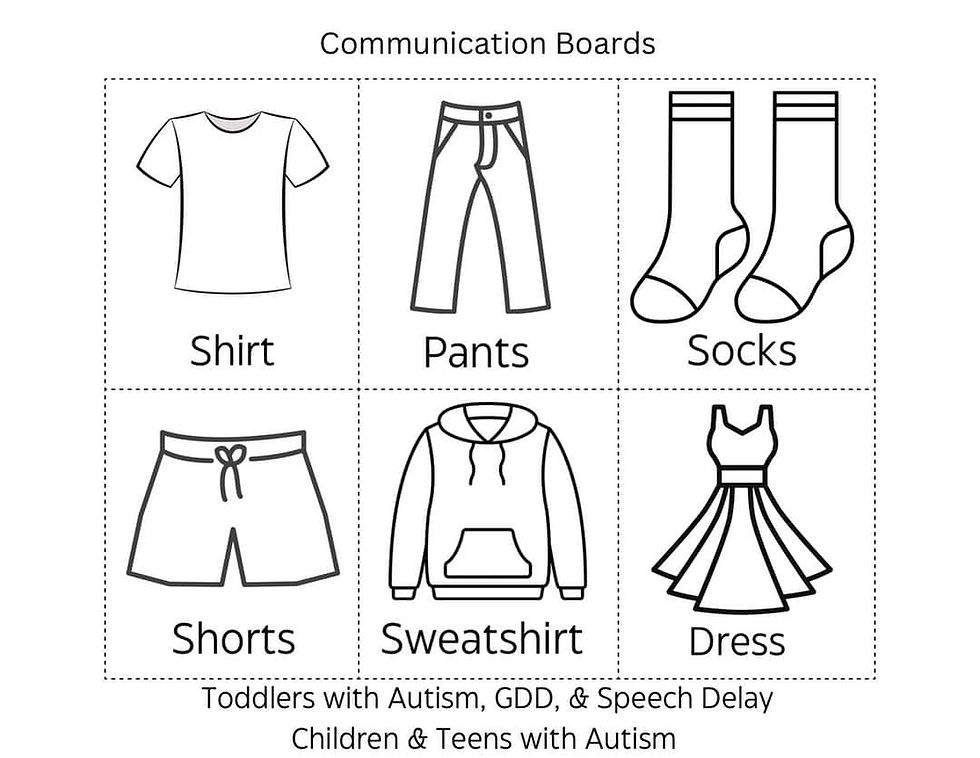


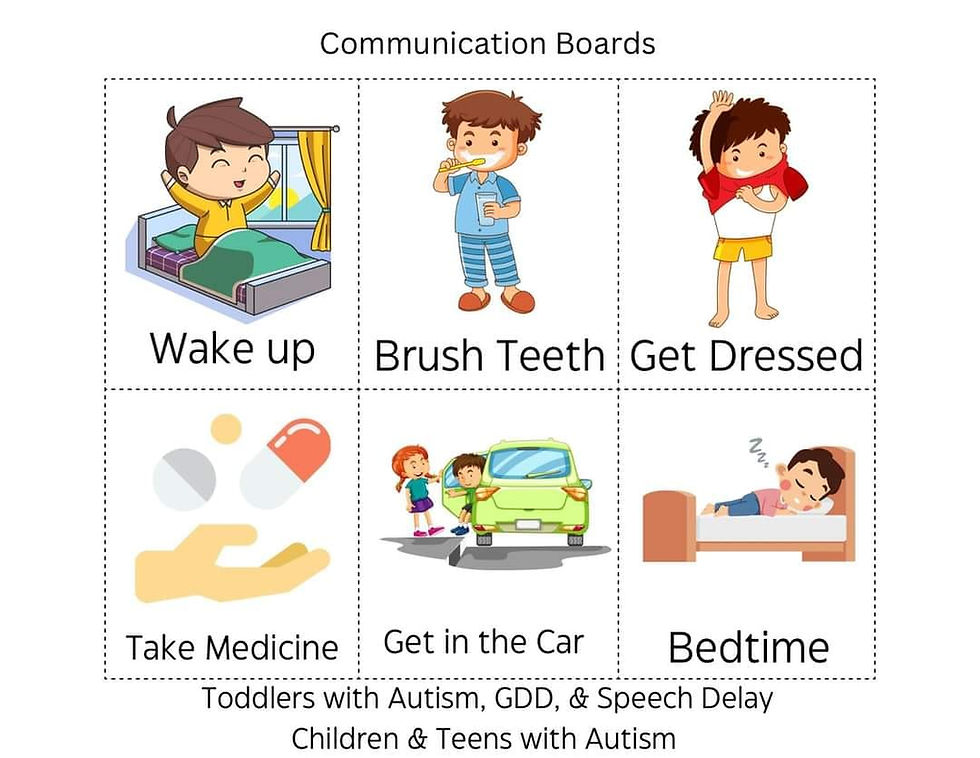


We hope that you all enjoy this little project of ours! Feel free to drop questions in the comments
For more in depth information on communication with your autistic kiddos see our featured post on communication
https://m.facebook.com/groups/403585854124106/permalink/884079076074779/?mibextid=Nif5oz
+24
All reactions:
106You, Amber Lee and 104 others
Comments